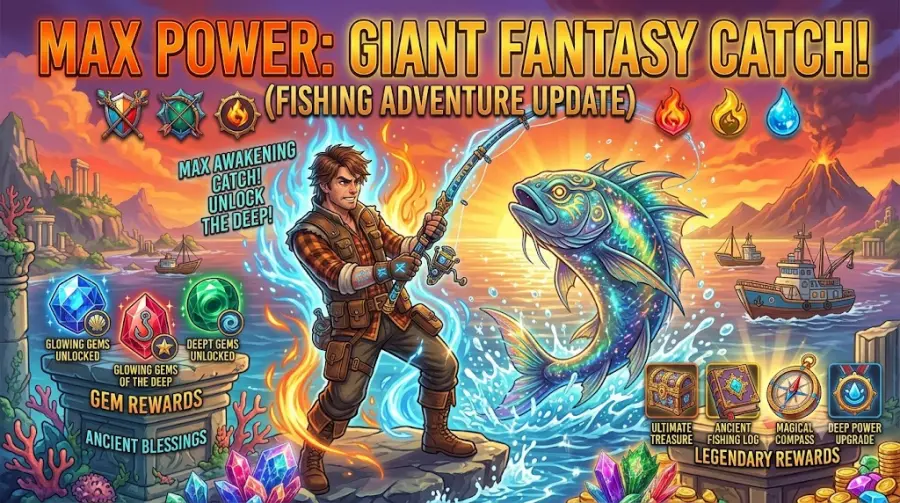
From Simple Fishing Game to Roblox Phenomenon How Fisch Hooked Millions of Players Worldwide
Created by WoozyNate and later supported by the highly respected development group Do Big, Fisch shattered expectations by reaching massive platform milestones and attracting hundreds of thousands of concurrent players. Its rapid rise has sparked discussion across the Roblox community, with players and developers alike asking the same question:
Highlights
- Combines RNG excitement with skill-based gameplay.
- Features a deep open-world progression system.
- Encourages exploration across multiple unique islands.
- Uses a highly addictive mutation and collection mechanic.
- Supports both active players and AFK grinding strategies.
- Receives major content updates and seasonal events.
- Avoids many traditional pay-to-win frustrations.
- Creates social competition through rare catches and server-wide announcements.
The Perfect Alternative to Traditional RNG Simulator Games
Why Players Were Growing Tired of Pure Luck-Based Experiences
For several years, the Roblox simulator category was heavily dominated by RNG-based experiences.
Games such as Sol's RNG proved that players enjoyed the thrill of chasing rare items and incredibly low-probability rewards. The excitement of seeing something valuable appear after thousands of attempts created a powerful dopamine rush that kept players engaged.
However, many of these games shared one major weakness.
The actual gameplay often required very little interaction.
Players would stand in one location, repeatedly press a button, or simply leave automation running while the game handled most of the progression. Eventually, many Roblox users began looking for something that delivered the same excitement while also requiring genuine participation.
Fisch arrived at exactly the right moment.
Instead of removing RNG entirely, it cleverly integrated random rewards into a much deeper gameplay experience.
The Brilliant Dopamine Loop
One of Fisch's greatest strengths is its reward system.
Every time a player casts a fishing line, several possibilities emerge:
- A common fish may appear.
- A rare creature might be caught.
- A legendary species could suddenly surface.
- An extremely rare mutation might transform an ordinary catch into something extraordinary.
This creates anticipation during every single cast.
Players never know whether the next fish will be average or become one of the most valuable catches on the server. That uncertainty fuels excitement and keeps players engaged for hours.
Unlike traditional RNG simulators, however, luck is only one piece of the equation.
Skill Matters in Fisch
Perhaps the biggest difference between Fisch and many simulator competitors is that players must actively participate.
The game includes a dynamic fishing mini-game inspired by beloved titles such as Stardew Valley and Webfishing.
Rather than clicking once and waiting, players must manage a moving balance scale that reacts differently depending on the fish being caught.
Each fish possesses its own Resilience statistic, which directly influences how challenging it is to reel in successfully.
This mechanic transforms fishing into a genuine gameplay challenge.
Success feels rewarding because players know their own reactions and timing contributed to the outcome. Instead of relying entirely on luck, they actively influence results through skill.
That simple difference dramatically improves player satisfaction.
A Deep Open-World Adventure Disguised as a Simulator
More Than Just Fishing
Calling Fisch a "simulator" doesn't fully capture what the game offers.
At its core, Fisch feels closer to a relaxing ocean-themed RPG than a traditional Roblox simulator.
Many simulator games encourage players to stay in one location and repeat the same activity endlessly. Fisch takes the opposite approach.
The game constantly pushes players toward exploration.
Every new upgrade opens opportunities to visit distant locations, uncover secrets, and discover fish species unavailable elsewhere.
This creates a genuine sense of adventure.
Exploring a Living World
The world of Fisch is filled with distinct regions, each offering unique challenges and opportunities.
Players can travel across beautifully designed islands and environments, including:
Snowcap
A frozen region featuring icy landscapes and unique fishing opportunities. The cold atmosphere provides a completely different experience compared to other parts of the map.
Magma Caverns
A dangerous volcanic area packed with fiery environments and rare catches. This location rewards players willing to take risks in pursuit of valuable fish.
Northern Expedition
One of the game's most mysterious destinations, encouraging exploration and discovery through challenging environments and exclusive content.
These locations are not simply visual reskins.
Each area introduces meaningful gameplay differences.
Players encounter:
- Specialized NPCs with unique quests.
- Region-specific fish populations.
- Localized weather systems.
- Dynamic day and night cycles.
- Hidden secrets waiting to be discovered.
- Exclusive merchants and vendors.
As a result, exploration remains rewarding throughout the entire progression journey.
A Progression System That Feels Fair
Building Wealth Through Effort
Fisch follows a progression loop that is easy to understand but difficult to put down.
Players:
- Catch fish.
- Sell catches for currency.
- Purchase equipment upgrades.
- Unlock better boats.
- Travel farther across the ocean.
- Access new regions and opportunities.
Each step naturally leads to the next.
Importantly, progression feels earned rather than forced.
Players consistently receive meaningful rewards for the time they invest, making advancement feel satisfying instead of frustrating.
No Single "Best" Fishing Rod
One of Fisch's smartest design choices is how it handles equipment.
Many simulator games eventually funnel players toward a single overpowered item.
Once obtained, every other upgrade becomes irrelevant.
Fisch avoids this problem entirely.
Popular rods such as the:
- Magma Rod
- Trident Rod
and many others all possess unique strengths.
Each fishing rod includes:
- Distinct passive abilities.
- Individual statistics.
- Specialized bonuses.
- Situational advantages.
Because different rods excel in different scenarios, players are encouraged to experiment and develop personal strategies.
This creates variety while helping the game avoid the pay-to-win problems that often damage long-term player retention.
The Mutation Matrix and the Power of Collecting
Why Collection Systems Are So Effective
Human psychology naturally gravitates toward collecting.
Whether it's trading cards, achievements, rare skins, or trophies, people enjoy building collections and pursuing completion.
Fisch takes this concept to another level through its mutation system.
Every fish can become something unique.
More Than 25 Unique Mutations
WoozyNate introduced a procedural mutation system that gives individual identity to every catch.
A fish isn't defined solely by its species.
Its value and rarity may also be influenced by:
- Weight
- Size
- Mutation type
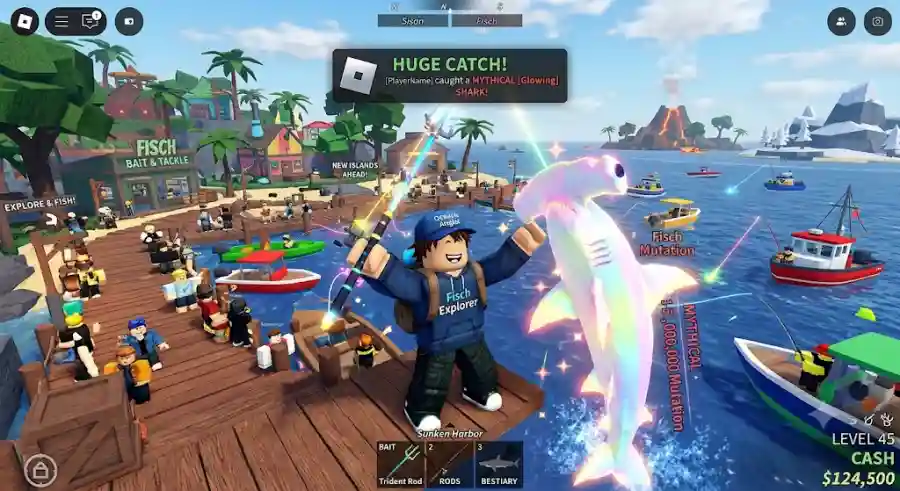
Players can discover more than 25 unique mutations, including examples such as:
- Shiny
- Sparkling
- Atlantean
These modifiers dramatically increase variety and create an enormous collection ecosystem.
The result is a Bestiary that feels nearly endless.
Completionists always have another goal to pursue.
Collectors always have another rare variant to hunt.
The Social Competition Factor
The collection system becomes even more powerful because it is highly visible.
The gameplay loop often looks something like this:
Cast Line → Complete Skill Mini-Game → Trigger RNG Mutation Check → Show Off Rare Catch
When a player reels in an enormous mutated shark or an exceptionally rare glowing creature, the game broadcasts the achievement to the entire server.
Instantly, everyone notices.
That public recognition sparks competition.
Players begin thinking:
"If they found one, maybe I can too."
That mindset encourages additional casts, longer play sessions, and stronger engagement.
The cycle repeats continuously.
The AFK Meta and Modern Roblox Culture
Embracing How Players Actually Play
No discussion about modern Roblox simulator success would be complete without mentioning automation and macros.
Many Roblox players enjoy active gameplay but also appreciate systems that continue progressing while they are away.
Rather than fighting this reality, Fisch embraces it.The game rewards active participation while also allowing players to benefit from automated fishing strategies.
Why AFK Progression Matters
Older players often balance Roblox with school, work, or other responsibilities.
AFK-friendly mechanics allow these users to remain connected to progression without dedicating every moment to active play.
Many players use macros to automate fishing sessions overnight.
This approach has generated some community debate, particularly regarding player count statistics and progression speed.
Even so, the system has become a powerful retention mechanism.
Players remain invested because they can continue making progress even during downtime.
For live-service games, retention is one of the most important metrics for long-term success.
Fisch understands this reality extremely well.
The Unexpected Impact of Copycat Games
Interestingly, Fisch also benefited from the appearance of competing titles.
Games such as Fish It introduced simplified versions of the fishing genre focused heavily on automation and auto-clicking.
Normally, copycat games might weaken the market leader.
Instead, something unexpected happened.
These simplified experiences often served as entry points for casual players.
After enjoying the basic fishing concept, many users eventually sought a deeper experience.
That journey frequently led them directly to Fisch.
The result was a fascinating "rising tide lifts all boats" effect, where competitors actually helped expand the overall audience for the fishing simulator genre.
Constant Updates Keep Players Coming Back
Fresh Content Is Essential on Roblox
Success on Roblox is never permanent.
Even the biggest games can lose momentum if updates slow down.
Fisch's developers appear to understand this better than most.
The team consistently delivers meaningful content updates that encourage players to return.
The Impact of Major Events
Large-scale events have become one of Fisch's most effective engagement tools.
One notable example is the legendary FischFright Halloween Event.
Events like these introduce:
- Time-limited challenges.
- Special ingredients.
- Exclusive rewards.
- Unique bosses.
- Server-wide activities.
- Rare seasonal catches.
Because many rewards are only available for a limited period, players feel a strong sense of urgency.
Nobody wants to miss out.
Whenever a major update launches, servers fill with players eager to discover new secrets hidden beneath the ocean's surface.
This ongoing evolution helps prevent stagnation and keeps the community active throughout the year.
Industry Impact: What Fisch Teaches Roblox Developers
Fisch's rise sends an important message to developers across Roblox.
Players are not necessarily looking for simpler games.
They are looking for games that respect their time.
The title successfully demonstrates that Roblox audiences still value:
- Meaningful progression.
- Skill-based gameplay.
- Exploration.
- Social interaction.
- Collection systems.
- Frequent updates.
Instead of relying exclusively on luck or automation, Fisch combines multiple successful design philosophies into a single cohesive experience.
That balance has proven incredibly powerful.
Why Fisch Matters for the Future of Roblox
The success of Fisch may influence future Roblox game development trends.
Many developers are now studying its formula closely.
The game shows that players appreciate experiences that blend:
- Cozy gaming elements.
- RPG progression.
- Open-world exploration.
- Simulator-style rewards.
- Social competition.
This hybrid design approach could become increasingly common as creators search for the next breakout hit.
Fisch has effectively demonstrated that innovation still matters, even within genres that many believed had already peaked.